
 APR’s engineers tune an Audi on a rolling road. Credit: APR
Anyone who has followed the aftermarket automotive performance industry for long enough can tell you just how dramatically it has changed over the past few decades. What once required mechanical tinkering and a lot of know-how can now be done in mere minutes via an electric control unit (ECU), which can extract significant boosts in horsepower and torque from naturally aspirated, turbocharged, or supercharged engines.
In some ways, though, the process has become much more difficult.
Just ask Alabama-based Audi Performance & Racing, more prominently known as APR. As modern vehicles become increasingly software-driven and OEMs continue to tighten security, the company has had to work harder each year to offer ECU tuning that delivers more power while staying within factory parameters for overall reliability. It’s a far more arduous process now than it was in the early aughts, when my own B5-generation Audi S4 was still fresh on the market.
I recently spoke with APR engineers to discuss the transition and learn more about the fascinating history of ECU tuning—including why unlocking more boost, advanced ignition timing, and other performance gains once felt more like entering a cheat code in a video game.
Simpler Times
People have been modifying engine air/fuel ratios and ignition timing since the term “automobile” became commonplace. The early hot rod and muscle car eras stand out as high points, as do the early days of turbocharging.
Fast-forward to the ’90s, and aftermarket tuners were routinely cracking open an engine’s computer, removing the appropriate memory chip, inserting it into a reader, and writing lines of code to a new chip. From there, they could make the changes they wanted: letting the turbo (or turbos) build more boost before dumping it all out the wastegates, adding fuel to accommodate the extra boost pressure, and more.
In the early 2000s, APR went further with its Enhanced Modular Chipping System, or EMCS.
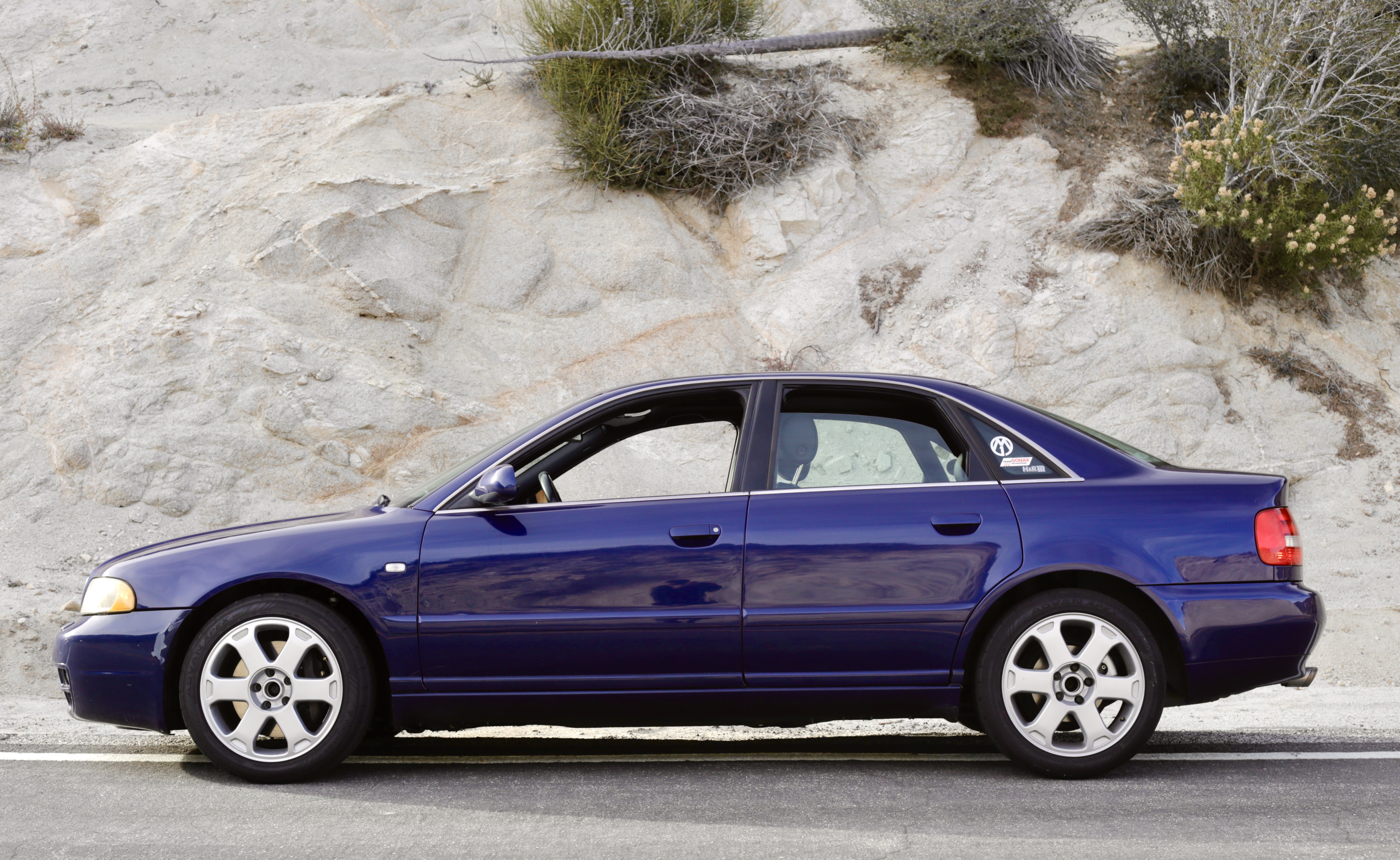 The author’s Audi S4. Credit: Peter Nelson
The EMCS had its own processor and memory, with four times the memory and four engine maps: one for 91 octane fuel, one for 93 or 100 octane, and others, each with its own advantages. Its processor could even tell the ECU to check whether it should use a different map.
How could it do this? As APR Calibration Engineer Chas Gorton explained, around the turn of the century, “Somebody had the bright idea: ‘Hey, we have the cruise control; what if we add a sequence of events that causes that window to move?’ That’s where program switching started.”
Before that, an early version relied on a physical switch on the side of the ECU, a cumbersome setup that meant popping the hood, removing trim, and flipping a switch. Eventually, somebody sat down and reverse-engineered a better solution, Gorton explained.
“What do I have access to, what can I see from this other controller that we just added to the ECU to know when the user is doing something?” Gorton said.
By digging into the system, APR could monitor the state of the cruise control, so it wrote code to change maps, clear fault codes, and perform other functions when a specific sequence of inputs was made via the cruise control stalk.
That’s why it’s like a cheat code—simply perform some basic, easy-to-remember actions while the engine is off, and you can increase the factory boost a few PSI over stock for extra performance or control.
The author’s interest in tuning started when he picked up a used APR-chipped ECU for his S4’s twin-turbo 2.7-liter V6. The first map is the factory tune, while the second increases the factory max boost pressure from around 9 PSI to 14.5 (1 bar) on 91 octane. The third map runs 1 bar on 100 octane. Because that fuel resists knock, ignition timing can be advanced quite a bit to take advantage of the boost.
That approach—reverse-engineering factory systems to unlock hidden headroom that OEMs deliberately leave on the table—defined the golden era of ECU tuning. As vehicles have grown more software-complex and automakers have layered in encryption, secure boot processes, and hardware-level protections, tuners like APR have had to evolve from clever chip swappers into sophisticated software engineers, waging an ongoing arms race against manufacturers determined to keep their calibrations locked down.