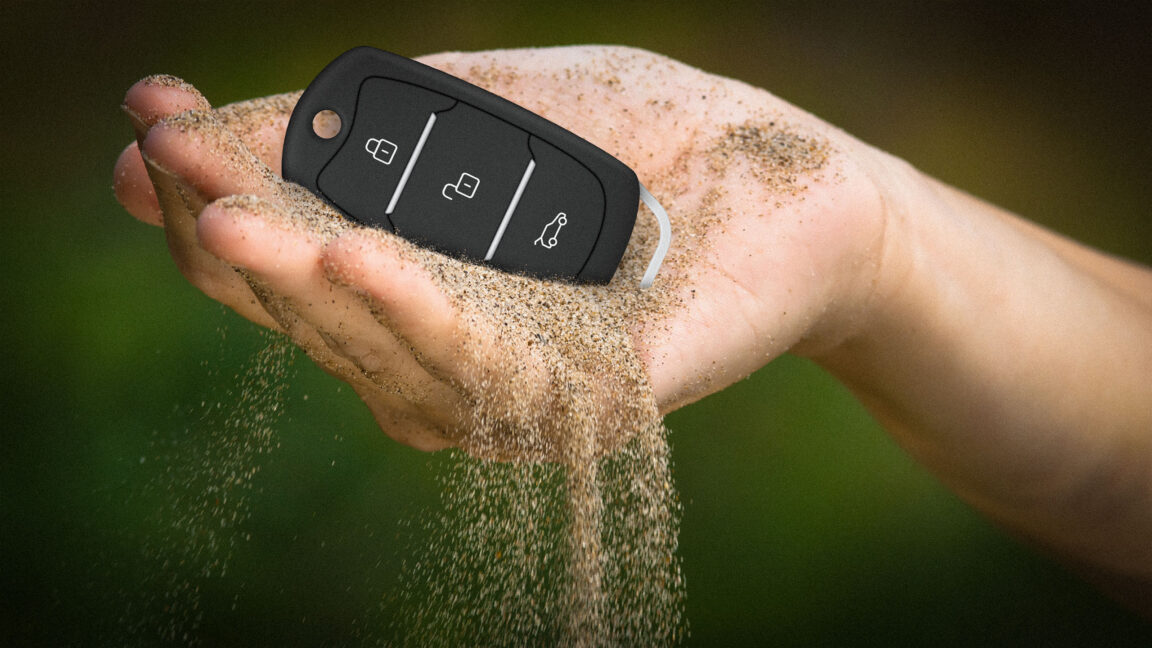
Automakers love connected vehicles, but support isn’t open-ended.
 Credit: Aurich Lawson | Getty Images
Do you use your vehicle’s app to pre-cool the cabin on a scorching day, confirm the doors are locked from bed, or have the car automatically call for help when the airbags go off?
Savor those connected, cloud-based conveniences while you can—the clock is already ticking on their obsolescence. In a few short years, you may be driving today’s vehicle without many of the features you currently enjoy.
How We Got Hooked on the Cloud
“Connected services”—cloud-based and networked features that let a vehicle communicate with external systems to deliver apps, data, and remote functions to drivers and passengers—have been around since the 1990s, when GM introduced OnStar as an option. Those early systems were mostly voice-centric, but they still depended on centralized back-end systems. Modern versions, which are fully data-driven and cloud-hosted, use much more sophisticated over-the-air data links to allow a considerably better feature set.
Today, virtually every volume brand offers some form of cloud-based telematics or a connected services stack. They can be deeply embedded, and most are fully integrated as the core of modern vehicle connectivity, supporting over-the-air (OTA) updates for the vehicle and app-based services for owners. As GM’s OnStar celebrates more than 30 years of service, a dozen others have joined, with each automaker branding its own unique services. HondaLink, Lexus Enform, FordPass, BMW ConnectedDrive, Volvo On Call, and Porsche Connect are just a few.
Despite their catchy marketing names, the systems are all functionally similar—each offers a very comparable feature set. Basics include remote lock/start, vehicle status and maintenance updates, location and tracking, and emergency assistance. Additional premium features include in-vehicle Wi-Fi hotspots, cabin preconditioning, stolen-vehicle tracking services, and concierge owner services.
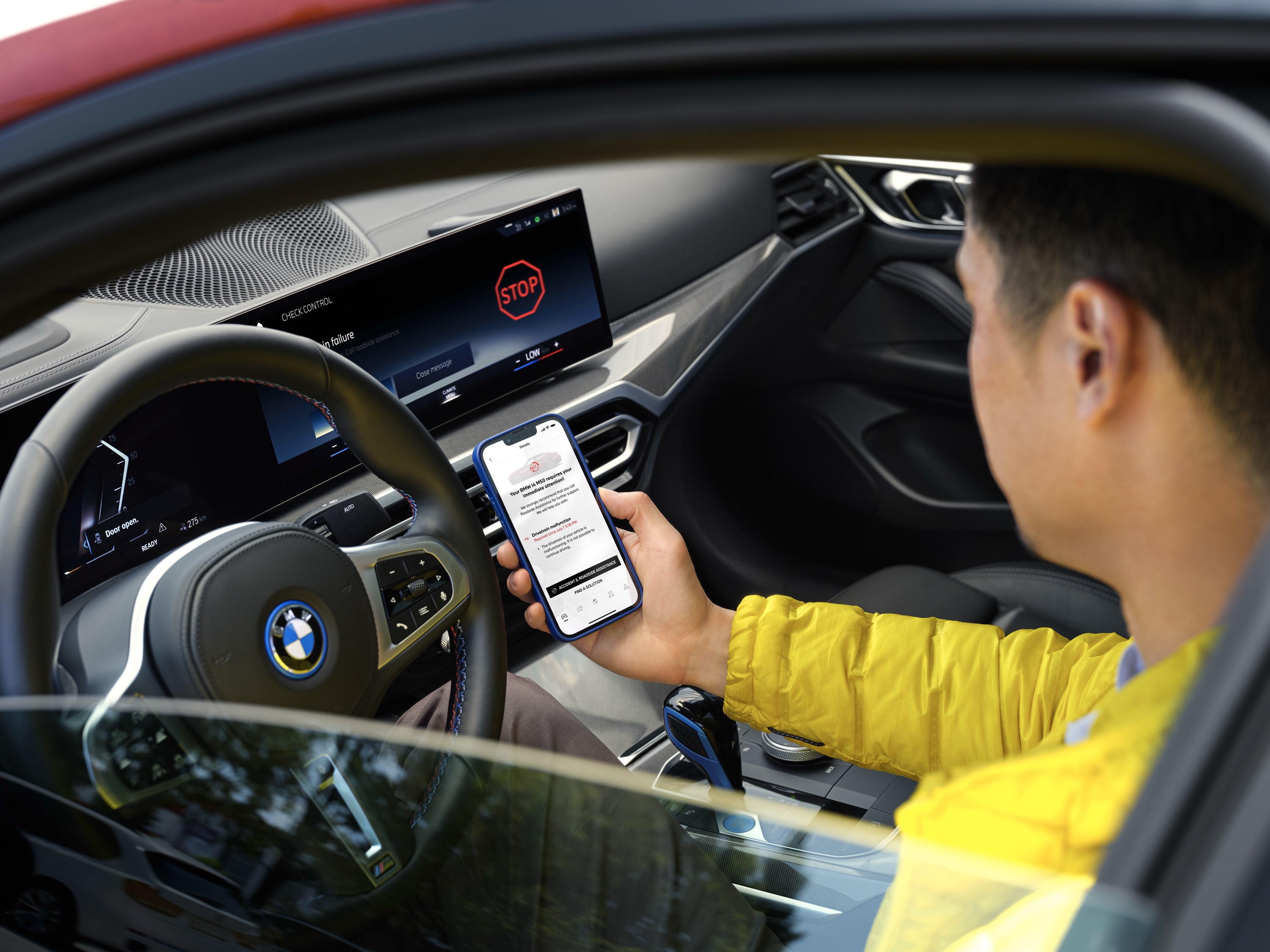 BMW’s service is called ConnectedDrive. Credit: BMW
Plenty of consumers have embraced the remote conveniences and demonstrated to automakers that they are more than willing to pay for them. After a bundled “free trial” following new vehicle delivery, manufacturers charge monthly fees or subscriptions for connected services. GM said that 40 percent of OnStar customers choose to renew their subscriptions after the introductory period expired.
Why Automakers Love a Connected Car
Of course, the OEMs get something out of it, too. Cloud-based services allow manufacturers to perform OTA software updates, eliminating the need to pay dealers for labor-intensive warranty repairs such as software-related safety recalls, bug fixes, and powertrain calibration errors. Instead of repairing one vehicle at a time, automakers can push updates to thousands of vehicles simultaneously. Plus, they can offer “product improvements” to owners, including UX changes, ADAS refinements, and new software versions for infotainment apps long after the start of production.
Vehicles require unique hardware for OTA and connected services, of course. The basic components of original equipment (OE) hardware in most passenger vehicles include a telematics box (TCU) with a 3G/4G/5G modem, a SIM/eSIM, and antennas—these comprise the “smartphone” component. There’s also a main onboard computer with flash memory and a boot system to install new software, programmed to revert to earlier code if something goes wrong so the car doesn’t brick itself.
The TCU and main computer are tasked with sending signals over the vehicle’s internal wiring (CAN/Ethernet) to various ECUs, which are engineered to accept updates. For everyone’s peace of mind, robust security measures must be in place to ensure that only genuine factory software can be installed and that hackers are locked out.
Subscription costs aside, consumers are generally pleased with cloud-based services. Connectivity improves convenience, comfort, and safety, while OTA updates keep vehicles feeling fresh and up to date. Unfortunately, that honeymoon phase doesn’t last forever—over time, vehicle cloud-based connected services are scaled back or, worse, shut off entirely.