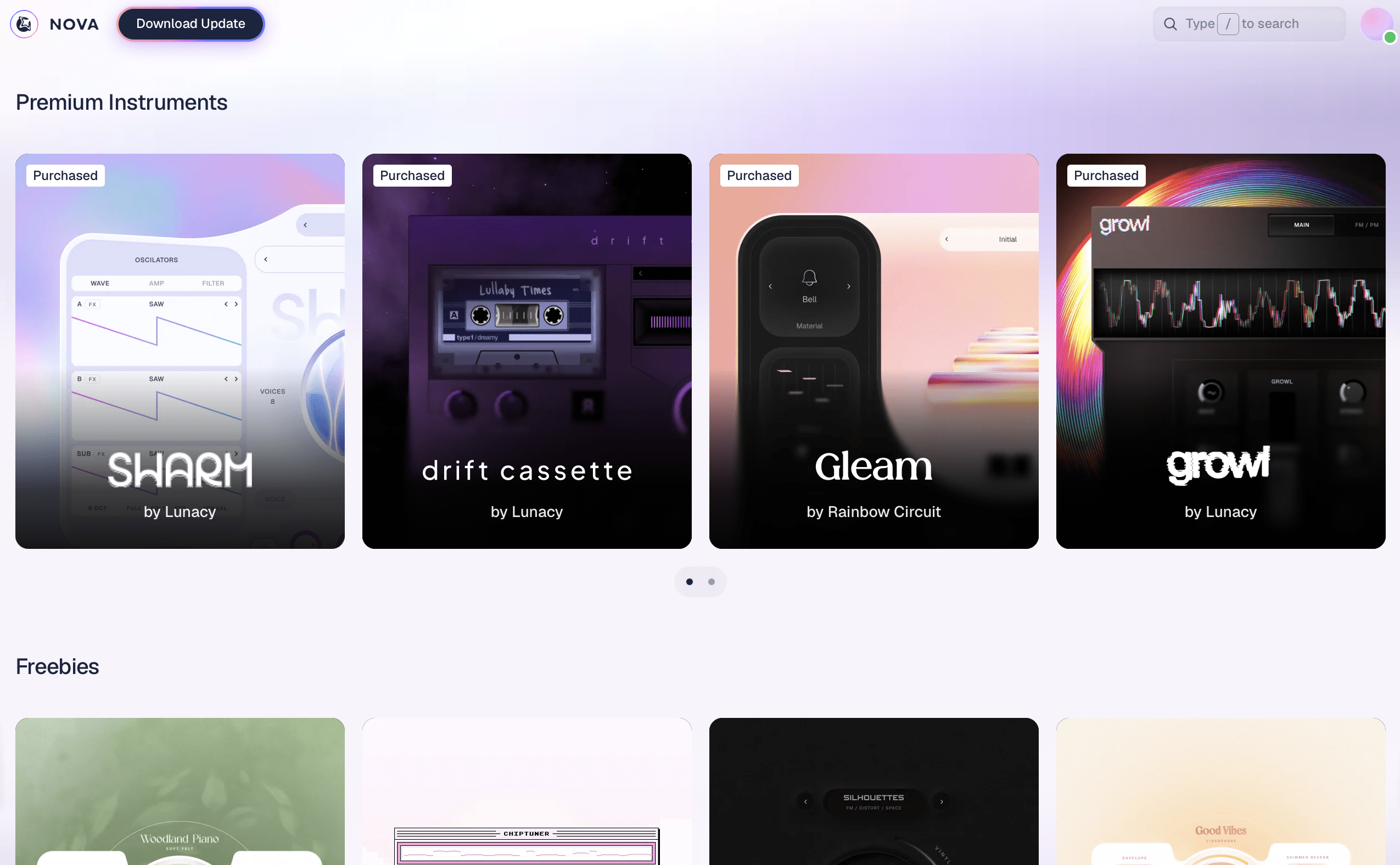
Lunacy, purveyor of fine VST plug-ins like Cube — a synth you control by moving a ball around a 3D space — has just launched Nova, a platform where creators can build custom music tools using AI and sell them to others. At first, a handful of instruments will be available, built either by Lunacy or a small selection of partner developers. Eventually, the company will launch Nova Builder, which will let anyone build their own plug-ins or remix existing ones.
There are 10 plug-ins available initially, covering everything from crunchy chiptunes to warbly vintage synths and evil ambient drones. None of them do anything particularly unique, but they all sound pretty solid. The lo-fi Drift Cassette synth and Silhouettes are standout favorites right off the bat. The former gets you nostalgic ’80s tones, while the latter is all about sci-fi soundscapes. They all have pretty simple interfaces reminiscent of Native Instruments’ Play series, with bright colors and a handful of controls.
How Nova Works
What makes Nova different is that plug-ins aren’t built using code in a text editor. Instead, they’re assembled using premade effects blocks and AI prompts. It’s not unlike Polyend’s Endless, except instead of vibe-coding a guitar pedal, you’re creating music software anyone can use on their computer.
Nova instruments don’t require dedicated hardware, and they don’t even require a digital audio workstation (DAW) — they can run directly in a browser. For more practical use, there’s also a Nova host plug-in that runs in your DAW of choice, letting you browse and load any Nova plug-in from your library and swap between them quickly.
An Evolving, Collaborative Ecosystem
Lunacy envisions Nova as a tinkerers’ paradise. Cofounder and CEO Casey Kolb said in a press release: “Say someone makes a step sequencer and shares it. You open it and wish you could add a custom shimmer reverb to the end of the signal chain. You can add that, then you can share your new version with a friend, and that friend expands it further. The tools are never fixed; they are always evolving.”
So far, the response from the music-making community to AI has been rather tepid. Tools like Endless have been met with, at best, cautious curiosity, and at worst, outright hostility. Lunacy is developing Nova out in the open, posting developer diaries and actively seeking customer input in an attempt to avoid some of the same pitfalls and win over wary musicians.